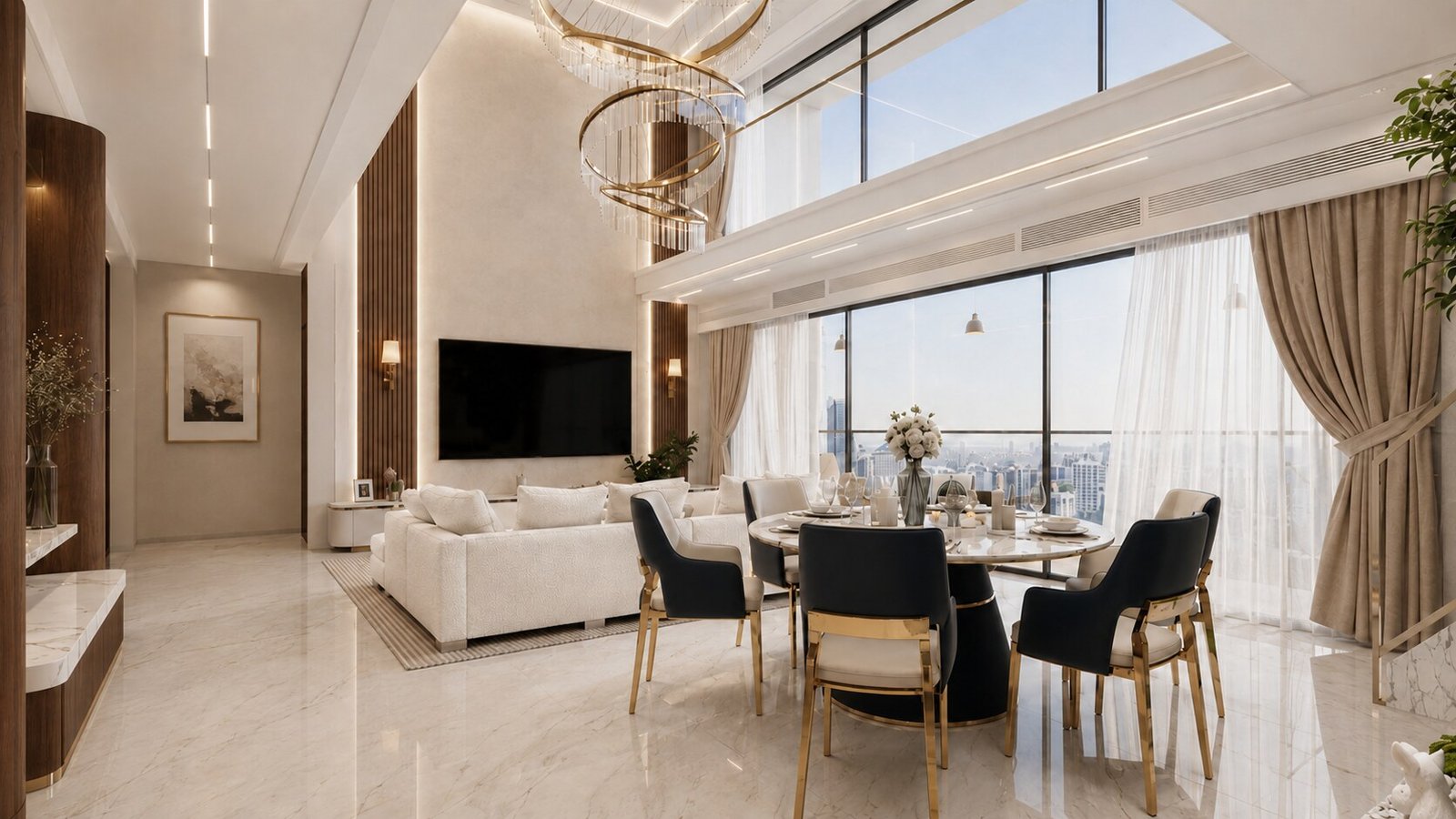
A well-designed interior is often judged by how it looks. The colours, furniture, materials, lighting and finishes come together to create the visual character of a space.
But a home is not simply meant to look beautiful. It needs to work beautifully too.
This is where the balance between functionality and aesthetics becomes important.
A space can be visually impressive but difficult to use. Similarly, a highly functional space can feel uninspiring if design and aesthetics are overlooked. The most successful interiors bring both together, creating spaces that are practical, comfortable and visually cohesive.
Start With How the Space Will Be Used
Before thinking about colours and finishes, it is important to understand the purpose of the space.
A living room needs to support conversations, relaxation and movement. A kitchen needs to accommodate cooking, storage and appliances. A bedroom needs to provide comfort, storage and a sense of calm.
Understanding these requirements helps shape the design from the beginning.
Instead of asking only, “How should this space look?”, the better question is: “How should this space work for the people using it?”
Once functionality is understood, aesthetics can be introduced in a way that supports it.
A Beautiful Space Should Feel Effortless
Good functionality is often noticed when it is missing.
A poorly planned layout can make movement difficult. Insufficient storage can create clutter. Incorrect furniture proportions can make a room feel cramped. Poor lighting placement can affect how comfortably a space is used.
When these details are planned properly, the space begins to feel natural.
The best functional elements often become almost invisible because they are integrated into the design rather than added later.
For example, storage can be designed to blend with the walls, appliances can be integrated into the kitchen layout and lighting can be positioned to support specific activities while contributing to the overall ambience.
Aesthetics Should Support Function
Aesthetic decisions should not work against the practical requirements of a space.
The choice of material, colour, furniture and lighting should consider how the space will actually be used.
A visually striking material may not always be appropriate for a high-use area. Similarly, furniture that looks beautiful but restricts movement can compromise the functionality of the room.
The objective is not to choose functionality over aesthetics—or aesthetics over functionality. It is to make them work together.
Consider the Details That Make Daily Life Easier
Functionality often comes down to small decisions.
The height of a work surface. The location of a switch. The depth of a cabinet. The position of storage. The direction in which a door opens. The placement of lighting.
These may seem like minor details, but they can significantly influence the everyday experience of a home.
When these elements are considered during the design stage, the final space feels more intuitive and comfortable.
Design for the Long Term
Trends can influence interior design, but a home should not be designed only around what is popular today.
A timeless interior considers how the space will continue to function over the years.
Materials should be practical. Storage should accommodate changing needs. Furniture should allow comfortable movement. Finishes should complement the overall design without becoming difficult to maintain.
This approach creates a space that remains relevant beyond the initial design phase.
At Rahnee Design Studio
At Rahnee Design Studio, we believe aesthetics and functionality should never be treated as separate parts of an interior.
Every design decision should contribute to both the visual experience and the everyday experience of the space.
The goal is to create interiors that feel beautiful without compromising comfort, practicality or usability.
Because the best-designed spaces are not just the ones that make you stop and look. They are the ones that make everyday living feel easier.
Good design is where beauty meets the way you live.